
Perth-based · 40+ lenders · Australia-wide
Greenside Finance team · Updated October 2026
Finance for a car, van or ute your business uses, new or used, from a dealer or privately. A Perth broker compares 40+ lenders, Australia-wide.
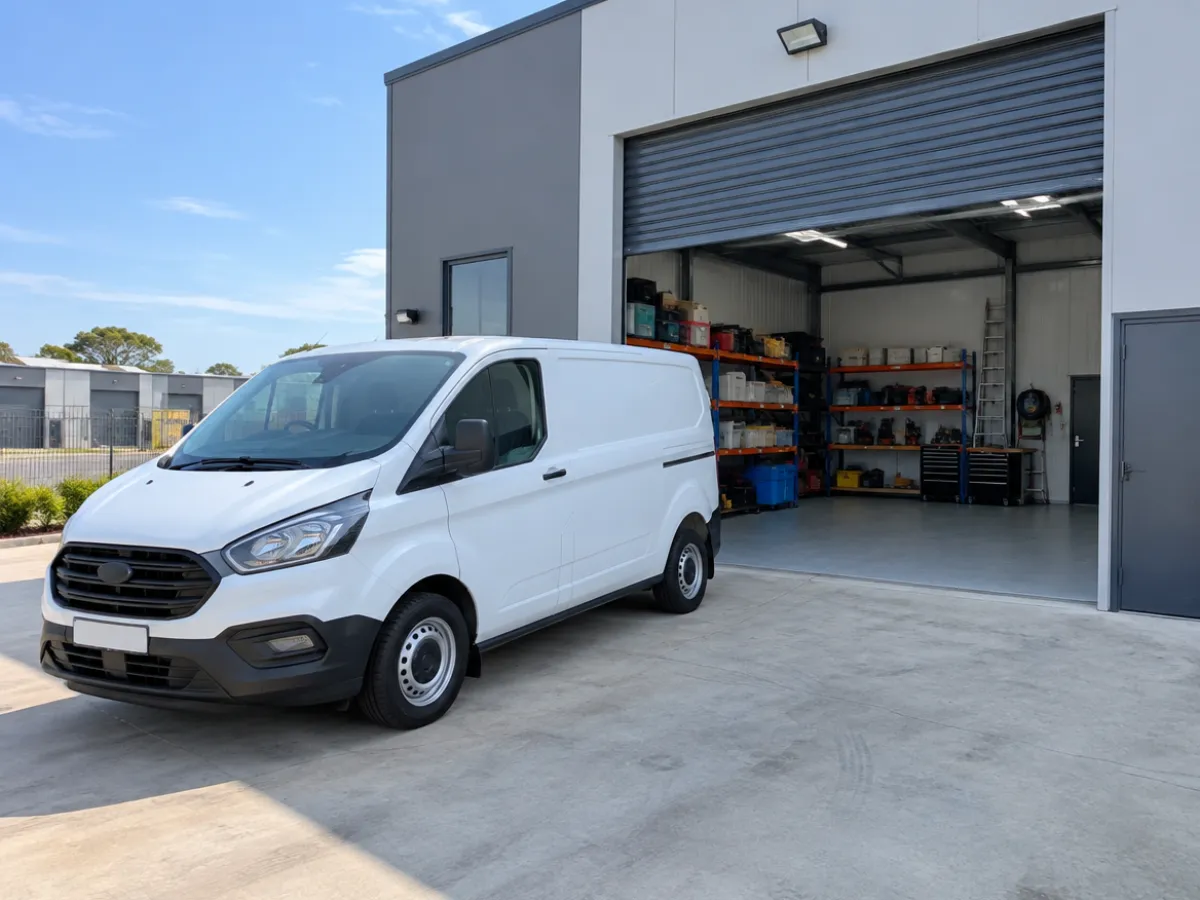
Greenside Finance arranges business car loans (also called commercial car loans or commercial vehicle finance) for ABN holders, companies and trusts buying cars, vans and utes, new or used, from a dealer or a private seller. We're Perth-based finance brokers comparing 40+ lenders for a sharp rate on your profile, and we lend across Western Australia and Australia-wide.
| Vehicle | Notes |
|---|---|
| Cars and SUVs | New or used. Hybrids and EVs are fundable, and a few lenders take a little off the rate for an EV. The ATO car limit caps the GST credit and depreciation on passenger cars (see the tax section below). |
| Vans and people movers | Panel vans, crew vans and people movers. Fit-out (shelving, racking, signage) can usually go on the same invoice. |
| Utes and dual-cabs | Covered on our ute finance page, including canopies, trays and mine-spec gear. |
| Dealer, private sale or auction | Most lenders fund all three. A few are dealer-only and some price private sales higher. We run a PPSR check on private sales. |
Minimum loan amount is generally $10,000, and the panel goes well into the hundreds of thousands for established businesses. Terms run from 1 to 7 years; 5 years is the most common. The vehicle can be up to about 15 to 20 years old by the end of the loan; some lenders go to 25 years, and a few have no age limit at all.
A commercial car loan is a business car loan under another name: a loan to an ABN holder for a vehicle used mainly in the business. Commercial vehicle finance covers the same thing plus the heavier end, so here's how lenders split it:
| Vehicle class | What's in it | How lenders treat it |
|---|---|---|
| Passenger vehicles | Cars, SUVs, people movers | Standard business car loan. ATO car limit applies to the GST credit and depreciation. |
| Light commercial vehicles (under 4.5 tonnes) | Utes, dual-cabs, vans, cab-chassis with trays | Same lenders and pricing as cars at most of the panel; some price them as a "primary asset", which can be sharper. Fit-out can go on the invoice. See ute finance. |
| Heavy commercial vehicles (over 4.5 tonnes) | Rigid trucks, tippers, prime movers, trailers | A different lender group with longer terms and older age limits. See truck finance. |
| Second-hand commercial vehicles | Used utes, vans and trucks from a dealer, auction or private seller | Fundable at most lenders. Age is measured at the end of the term, and a used vehicle usually prices a little higher than new. We run a PPSR check on private sales. |
Commercial vehicle loan requirements are the same as for a business car loan: an active ABN, the vehicle mainly for business use, ID, and then one of three options: low doc (your declaration of income, no full financials or tax returns), lite doc (BAS or bank statements) or full doc (tax returns or financials). The requirements by ABN age are in the table further down.
| Option | How it works | Suits |
|---|---|---|
| Chattel mortgage | Your business owns the vehicle from day one and the lender holds it as security. If you're GST-registered you may be able to claim the GST on the purchase price in your next BAS. Interest and depreciation may be deductible. | Most GST-registered businesses. The usual starting point. |
| Finance lease | The lender owns the vehicle and you pay to use it, usually with a residual or an option to buy at the end. GST is generally spread across the payments. | Businesses that want to hand the vehicle back or prefer lower repayments with a residual. |
| Consumer car loan | A personal loan secured on the car, assessed on your personal income. | Vehicles used mostly for private purposes, or buyers who prefer a personal loan. We arrange these too. |
Comparing brokers for a chattel mortgage? See how to choose a chattel mortgage broker in Perth.
We don't arrange novated leases. If your employer offers one, that's a separate product from a business car loan. Tax treatment depends on your situation: confirm it with your accountant.
There isn't one best structure. The right one depends on GST registration, how long you'll keep the car, and cash flow. This is how it usually falls:
| Your situation | What usually works best |
|---|---|
| GST-registered, keeping the car 3 years or more | Chattel mortgage. You claim the GST in your next BAS, own the vehicle, and can add a balloon to keep repayments down. |
| Replacing the vehicle every 2 to 3 years | Finance lease or a chattel mortgage with a balloon that matches the car's expected value, so you can trade and refinance the balance. |
| Not GST-registered or a new ABN | Chattel mortgage is still usual, but the GST credit doesn't apply. Lender choice is narrower, so the deposit matters more than the structure. |
| Vehicle used mostly privately | A consumer car loan: assessed on your personal income, with consumer protections and a comparison rate. |
| Buying several vehicles a year | A pre-approved facility limit with one lender, so each vehicle settles without a fresh application. We run these for Perth trade businesses adding vans to a fleet. |
On a chattel mortgage, a GST-registered business can usually claim the GST on the purchase price in the BAS for the quarter it buys the vehicle, even though the lender paid for it. For passenger cars the ATO car limit applies: for 2026-27 it's $69,883, so the most GST you can claim on a car above that price is $6,353, and depreciation is capped at the limit too. The limit applies to "cars" (vehicles that carry under one tonne and fewer than nine passengers), so utes and vans designed to carry a tonne or more sit outside it. Many dual-cab utes carry less than a tonne and count as cars, so check the payload. Interest and depreciation on the business-use share are generally deductible, and the $20,000 instant asset write-off can apply to a cheaper vehicle for a small business. Keep a logbook if there's any private use. This is general information, not tax advice: confirm it with your accountant, or see the ATO's car thresholds page.
We compare 40+ lenders for a sharp rate, and which lender is sharpest changes with your profile. Here's what moves the price:
| Factor | Effect on rate and choice |
|---|---|
| ABN and GST age | Older is cheaper. Top pricing tiers usually need 2 to 3 years of ABN and 1 to 3 years of GST registration. |
| Property | Owning a home (a spouse's name counts at some lenders) usually unlocks a better rate and easier low doc. |
| Deposit or trade-in | Lowers the amount borrowed and can offset having no property. |
| Vehicle | Newer vehicles are cheaper to finance than older ones. Private sale can add to the rate at some lenders. |
| Credit file | A good credit history gives you the most lender choice. Past defaults narrow the options but don't always rule you out. |
| Fees and early exit | Fees and early payout costs vary between lenders. A lower rate with a high fee isn't always cheaper, so we compare total cost and explain any fees before you go ahead. |
You see the rate, fees and repayments in writing before you sign.
| Your situation | What usually works |
|---|---|
| ABN under 12 months | A smaller group of start-up lenders. Some accept an ABN of 3 to 6 months, usually with a deposit and experience in the same trade. |
| ABN 1 to 2 years, GST registered | More lenders open up. A deposit or property still matters. |
| ABN 2 to 3 years, GST 1 year or more | Several lenders offer their top tier at this point, which is where the pricing gets sharper. |
| ABN and GST 3 years or more | The widest choice and the sharpest rates, including low doc without tax returns. |
| No property | Expect a 10 to 20% deposit or trade-in with most lenders. A few lend with no deposit at a higher cost. |
An older sole-trader ABN can often count when you move to a Pty Ltd. Tell us the history and we'll show you which lenders recognise it.
If you don't have up-to-date tax returns, read low doc and lite doc car loans.
Illustrative scenario based on common enquiries, not a specific client.
A Perth cleaning company, ABN about 3 years, GST-registered, with the director owning a home, wanted a used van for around $38,000. With 3 years of ABN and GST plus property, the business fitted the lenders' low doc criteria, so it didn't need full financials or tax returns. Lenders competed on their top tier, and the final choice came down to fees and early-exit cost rather than the headline rate.
Yes. Some lenders accept an ABN of a few months, especially if you've worked in the same trade, usually with a deposit. Choice and pricing improve at 12 months and again at 2 to 3 years.
If the vehicle is used mainly for business, a business loan (such as a chattel mortgage) can suit, and you may be able to claim GST and deductions. If it's mostly private, a consumer loan is the right product. Your accountant can confirm the tax treatment.
With a chattel mortgage your business owns the vehicle from day one. With a lease the lender owns it and you pay to use it. See the table above. Which suits you depends on cash flow and tax.
No. We arrange business car loans, chattel mortgages and leases for ABN holders. A novated lease is set up through your employer.
Not always. Established businesses with property can often finance the full price. Without property, most lenders want 10 to 20% as cash or trade-in.
Often, yes. Typical maximums across our panel are 40 to 50% of the price on a 2 to 3 year term, 30 to 35% on a 5 year term, and no balloon on 6 or 7 year terms. Many lenders only allow one on a vehicle under about 5 years old, and all of them cap it by the vehicle's age at the end of the term. A balloon lowers repayments but leaves a lump sum at the end, so we quote it with and without.
Yes, but the cost varies more than the rate does. Most commercial lenders charge 30 to 70% of the remaining interest, one charges all of it, and a couple charge nothing, or nothing after the first two years. If you might upgrade or sell early, tell us and we'll pick a lender with low break costs.
If you're GST-registered and buy on a chattel mortgage, you can usually claim the GST on the business-use share in your next BAS. For passenger cars the claim is capped by the ATO car limit ($6,353 maximum for 2026-27); utes and vans designed to carry a tonne or more are outside the limit, so check the payload. This is general information, not tax advice: confirm with your accountant.
Sometimes. A few specialist lenders on our panel take past defaults or a discharged bankruptcy on a business vehicle, usually with a deposit and a higher rate. A good credit history gives the widest choice; past defaults narrow it without always ruling you out.
Ideally up to 15 to 20 years old by the end of the loan. Some lenders accept older, with a shorter term or a deposit.
Straightforward applications can be decided the same day, sometimes within a few hours; others take a day or two while the lender checks documents. Approval always depends on the lender's assessment.
Yes. Lenders and brokers use "commercial car loan", "business car loan" and "commercial vehicle finance" for the same product: a loan to an ABN holder for a vehicle used mainly in the business, usually a chattel mortgage. Heavier vehicles over 4.5 tonnes sit under truck finance.
Two quick steps. No impact on your credit score to get a quote.
Greenside Finance Pty Ltd (ABN 76 678 053 122) is an Authorised Credit Representative (#561052) of Fintelligence Pty Ltd, Australian Credit Licence #511803. Unit 5/531 Hay St, Subiaco WA 6008 · 1800 147 336. All finance is subject to lender approval, terms, conditions and fees. Information on this page is general and doesn't consider your objectives, financial situation or needs.

